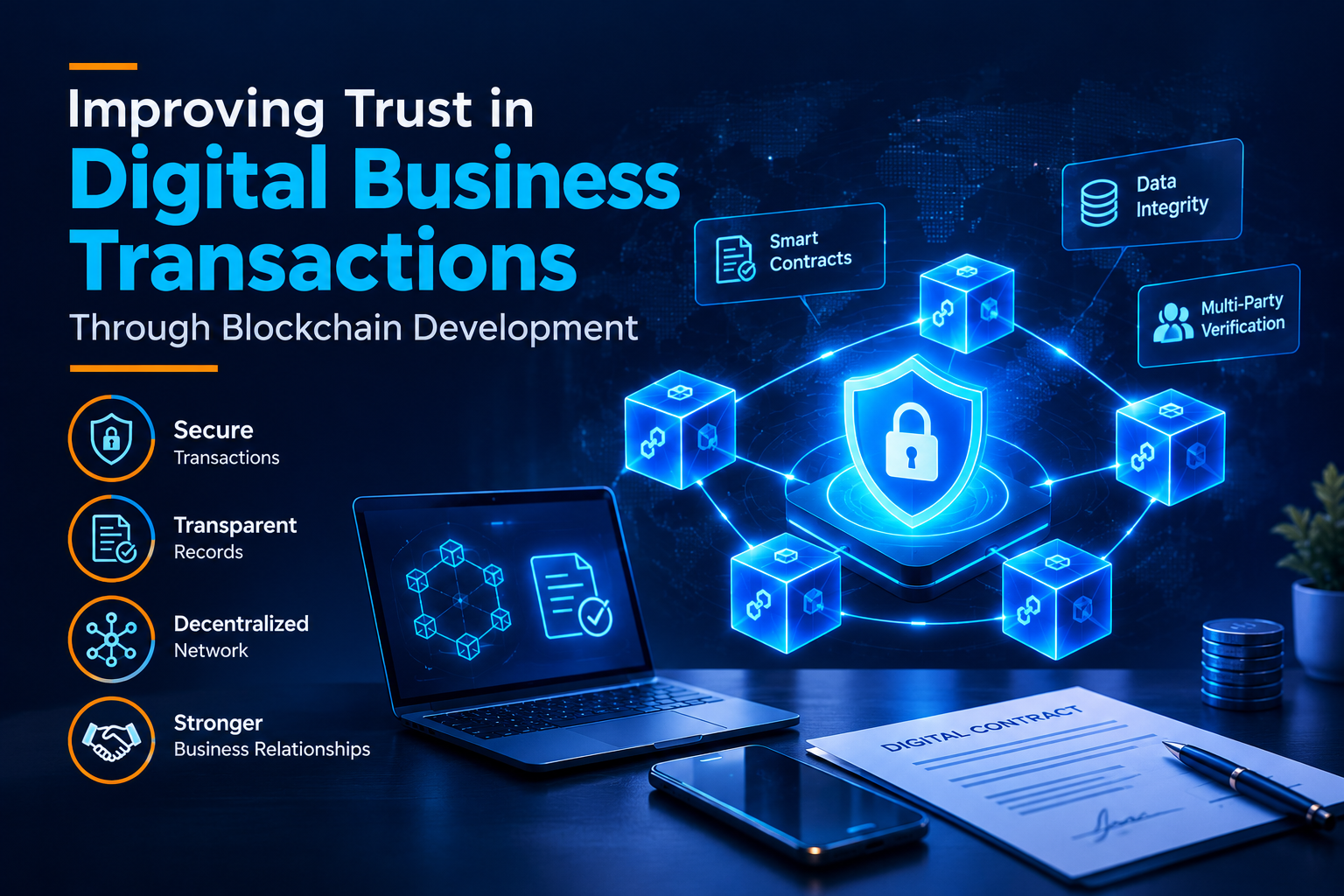
Introduction
Trust is one of the most important factors in digital business transactions. Businesses exchange sensitive information, process payments, manage contracts, and collaborate with multiple partners through digital platforms. However, concerns about data manipulation, unauthorized access, fraud, and a lack of transparency can make these transactions challenging.
Blockchain technology offers a way to improve trust by maintaining shared, tamper-evident transaction records across a distributed network. With appropriate implementation, blockchain can help businesses improve transparency, strengthen accountability, and create more reliable digital processes.
Organizations exploring secure digital solutions can learn more about blockchain technology and its applications through professional development services.
What Is Blockchain Development?
Blockchain development involves designing and building applications that use distributed ledger technology to record, verify, and share information. Instead of relying entirely on a single centralized database, blockchain networks can maintain synchronized records across multiple participating nodes.
Depending on the network design, transactions can be verified through consensus mechanisms and recorded in a way that makes unauthorized changes easier to detect.
Blockchain development may include smart contracts, decentralized applications, digital identity solutions, supply chain tracking, and secure transaction management systems.
Why Trust Matters in Digital Business Transactions
Digital transactions often involve multiple parties that may not have direct access to one another's internal systems. Without reliable verification and clear records, businesses may experience disputes, delays, and operational inefficiencies.
Trust is essential for several reasons:
1. Transaction Transparency
Businesses need clear records of activities, approvals, and exchanges. Appropriate blockchain implementations can provide authorized participants with a consistent view of transaction history.
2. Data Integrity
Accurate business records are essential for financial reporting, supply chain management, and contractual processes. Blockchain can help make unauthorized changes detectable through cryptographic techniques and linked transaction records.
3. Accountability
A well-designed blockchain system can record transactions and relevant actions, helping organizations review activity and establish clearer audit trails.
4. Reduced Reconciliation Efforts
When participating organizations maintain separate records, teams may need to spend considerable time comparing data and resolving inconsistencies. A shared ledger can reduce some reconciliation work when participants agree on common processes and data standards.
5. Improved Business Relationships
Reliable transaction records and clearly defined verification procedures can help partners collaborate with greater confidence.
How Blockchain Improves Trust in Digital Transactions
1. Creates Tamper-Evident Records
Blockchain records are linked using cryptographic techniques. Changing previously recorded information can disrupt the chain's verification structure or require control over the network's validation process.
This makes unauthorized modifications easier to identify, although the level of protection depends on the blockchain architecture and its security controls.
2. Enables Smart Contract Automation
Smart contracts are programs that execute predefined rules when specified conditions are met. They can automate activities such as payment releases, transaction approvals, and agreement execution.
Automation reduces the need for certain manual steps and helps ensure that business rules are applied consistently. However, smart contracts still require careful development, testing, and security reviews.
3. Improves Transaction Traceability
Blockchain can maintain a chronological record of transactions and related events. Businesses can use these records to track the movement of assets, verify exchanges, and investigate discrepancies.
For example, supply chain participants may record product transfers to improve visibility into the journey of goods from suppliers to distributors.
4. Supports Shared Verification
In a multi-party business environment, blockchain can allow participating organizations to verify records against a shared ledger rather than depending entirely on separate databases.
This can be useful when multiple parties need to confirm transaction status or establish a common version of recorded events.
5. Strengthens Digital Asset Management
Blockchain applications can support the transfer and tracking of digital assets, including tokens and certain forms of digitally represented ownership.
Appropriate access controls, identity verification, and governance processes remain important for protecting assets and preventing unauthorized activity.
Challenges Businesses Should Consider
Blockchain is not the right solution for every business process. Organizations should evaluate its limitations before investing in development.
Common considerations include:
- Scalability: Some networks may struggle with high transaction volumes or require additional scaling solutions.
- Implementation costs: Development, infrastructure, maintenance, and security reviews can increase project costs.
- Regulatory requirements: Businesses must consider applicable financial, privacy, contractual, and industry-specific obligations.
- Data privacy: Information recorded on a blockchain may be difficult to remove, making careful data design essential.
- Integration complexity: Blockchain applications may need to connect with existing ERP, CRM, payment, and database systems.
- Governance: Multi-party networks require clear rules for access, validation, upgrades, and dispute resolution.
Evaluating these factors helps businesses determine whether blockchain provides a practical advantage over conventional database or transaction-management systems.
How Clopid Can Support Digital Business Solutions
Building trustworthy digital transaction systems requires careful planning, secure implementation, and integration with existing business workflows. Organizations should assess their operational requirements before selecting technologies or automating important processes.
A structured technology approach can help organizations evaluate process requirements, improve system coordination, and identify opportunities to make digital workflows more reliable.
Businesses considering blockchain-related projects should also examine how the proposed solution will integrate with their current applications, transaction procedures, and security policies.
Learn more about digital business solutions:
Frequently Asked Questions
1. How does blockchain improve trust in digital business transactions?
Blockchain can improve trust by providing shared transaction records, cryptographic verification, traceability, and tamper-evident data structures. Its effectiveness depends on appropriate network design, access controls, and security practices.
2. Is blockchain completely secure for business transactions?
No technology is completely secure. Blockchain can support data integrity and transaction verification, but smart contract vulnerabilities, compromised credentials, software defects, and poor configuration can still create risks.
Conclusion
Improving trust in digital business transactions requires reliable records, transparent processes, effective security controls, and clear accountability. Blockchain development can support these goals through shared ledgers, cryptographic verification, transaction traceability, and smart contract automation.
However, successful implementation depends on selecting the right use case, protecting sensitive information, testing applications thoroughly, and maintaining appropriate governance and security procedures.
Businesses should evaluate blockchain alongside other technology options to determine which approach best meets their operational needs. With careful planning and suitable technical support, organizations can build more reliable digital workflows and strengthen confidence in their business transactions.
For digital business and technology solutions, explore Clopid.
Visit Website: https://www.clopid.com/