Introduction
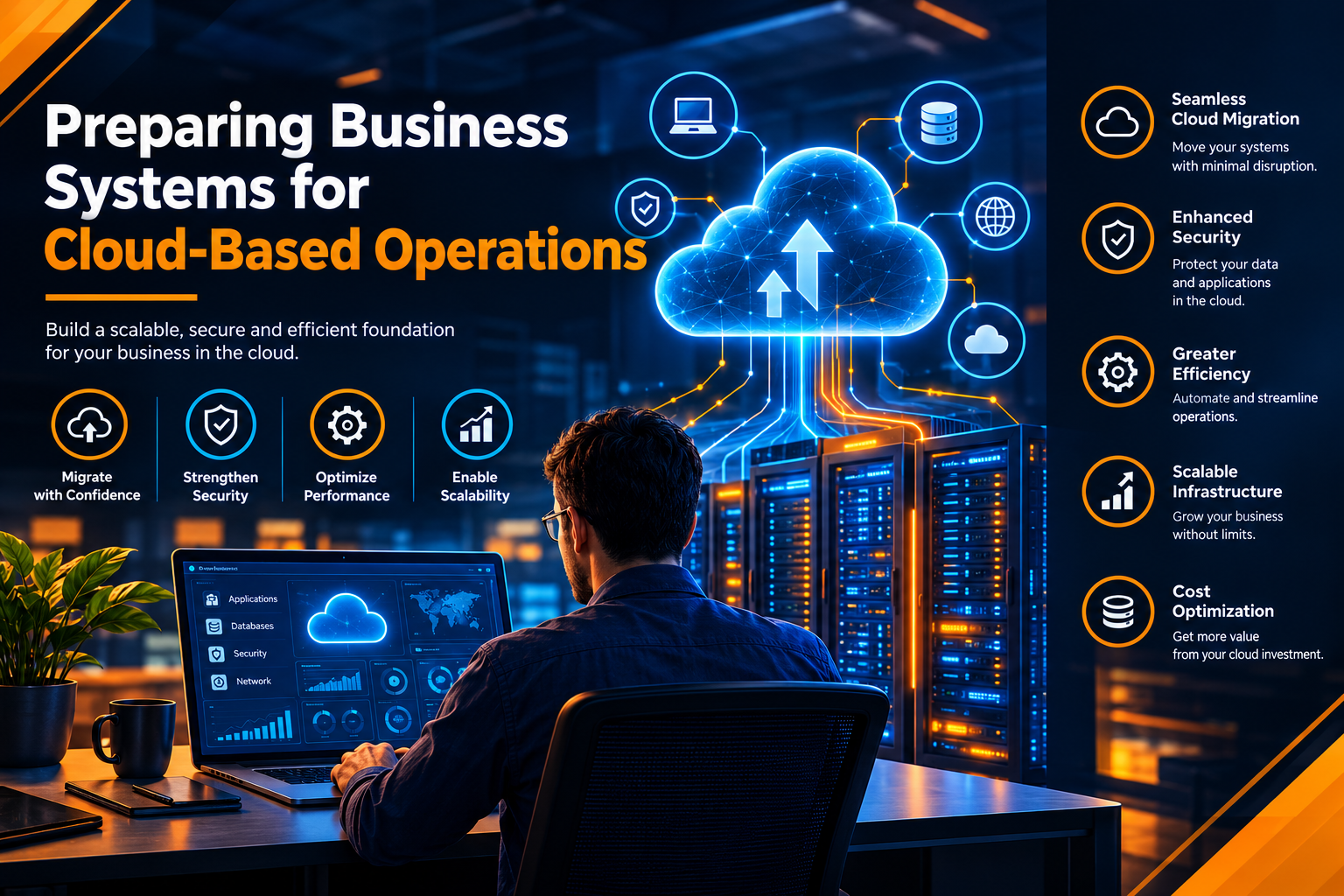
Modern businesses depend on digital systems to manage daily operations, store information, communicate with customers, and coordinate different departments. As organizations grow, traditional IT infrastructure may struggle to support increasing workloads, remote collaboration, and changing business requirements. Cloud-based operations provide an opportunity to improve flexibility, scalability, and operational efficiency.
Cloud integration and cloud migration help businesses connect existing applications with cloud platforms and move workloads from traditional infrastructure to cloud environments. However, successful cloud adoption requires careful planning, secure data management, and effective integration between business systems.
Organizations looking to improve their digital infrastructure can explore technology solutions through Clopid.
What Are Cloud-Based Operations?
Cloud-based operations involve using cloud computing services to run applications, store data, manage workloads, and support business processes. Instead of relying entirely on locally maintained servers, organizations can access computing resources through cloud platforms according to their requirements.
These operations may include cloud-hosted business applications, centralized data storage, automated workflows, remote collaboration tools, and integrated enterprise systems.
A well-planned cloud environment helps businesses manage resources more efficiently while supporting changing operational demands.
Why Businesses Are Moving Toward Cloud-Based Operations
1. Improved Scalability
Cloud platforms allow organizations to increase or decrease computing resources according to workload requirements. This flexibility is useful for businesses experiencing seasonal demand, rapid growth, or changing application usage.
2. Greater Operational Flexibility
Cloud-based applications can support authorized access from different locations and devices. Employees can collaborate more easily when business systems are available through secure, properly configured cloud environments.
3. Better Collaboration Between Departments
Integrating business applications helps departments exchange information more efficiently. For example, sales, finance, inventory, and customer support teams can work with connected systems rather than relying on disconnected records.
4. More Efficient Resource Management
Cloud services can help businesses allocate computing resources according to demand. Monitoring usage and selecting appropriate service plans can also help organizations manage infrastructure expenses.
5. Business Continuity
Cloud environments can support backup, recovery, and redundancy strategies. When properly designed and tested, these capabilities can help organizations recover from infrastructure failures and other operational disruptions.
Understanding Cloud Integration
Cloud integration is the process of connecting cloud-based applications, databases, services, and existing business systems so that they can exchange information and work together.
For example, an organization might integrate its customer relationship management (CRM) platform with accounting software, inventory management, and an online store. This allows relevant information to flow between systems with fewer manual steps.
Benefits of Cloud Integration
Automated data exchange: Connected applications can transfer information automatically, reducing repetitive data entry.
Improved data consistency: Integration can reduce discrepancies between systems when data mappings, validation rules, and synchronization processes are properly configured.
Streamlined workflows: Employees can complete business activities more efficiently when related applications communicate effectively.
Better reporting: Integrated systems can provide a more complete view of business activity and support informed decision-making.
Reduced manual effort: Automated processes can reduce administrative workloads and free employees to focus on higher-value activities.
Businesses should select appropriate integration methods, such as APIs, middleware, or event-based communication, according to their technical requirements and existing infrastructure.
Understanding Cloud Migration
Cloud migration involves moving applications, databases, workloads, or IT infrastructure from on-premises environments or other platforms to a cloud environment.
The migration process may involve moving an application without major changes, modifying its infrastructure, redesigning components, or replacing outdated software with a suitable cloud-based alternative.
The right migration strategy depends on application complexity, performance requirements, security needs, budget, and long-term business goals.
Common Cloud Migration Approaches
Rehosting: Moving an application to the cloud with minimal changes.
Replatforming: Making selected optimizations while retaining the application's core architecture.
Refactoring or re-architecting: Modifying application design to take better advantage of cloud-native capabilities.
Repurchasing: Replacing an existing application with a different product, such as a suitable software-as-a-service solution.
Retaining: Keeping selected systems in their current environment when migration is not currently practical.
Retiring: Decommissioning systems that are no longer necessary.
Evaluating these options helps businesses avoid unnecessary migration costs and select the most appropriate approach for each workload.
Common Challenges in Cloud Migration and Integration
Although cloud-based operations offer several advantages, businesses may face challenges during implementation.
Legacy System Compatibility
Older applications may not support modern cloud integration methods. Some systems may require middleware, configuration changes, or redevelopment before they can work effectively with cloud platforms.
Data Security and Compliance
Moving information to the cloud requires careful consideration of access controls, data location, privacy requirements, and regulatory obligations.
Migration Downtime
Poorly planned migration activities can interrupt business services. Staged deployment, backups, rollback plans, and appropriate testing can help reduce disruption.
Unexpected Costs
Cloud expenses may increase because of excessive resource allocation, data transfer charges, unused services, or inefficient configurations.
Regular cost monitoring and resource optimization can help businesses maintain control over spending.
Integration Complexity
Connecting multiple applications can be challenging when systems use different data formats, authentication methods, or communication protocols.
Documented interfaces, standardized data models, and ongoing integration testing can help manage this complexity.
The Role of Cloud Integration in Business Growth
Cloud integration connects business applications and helps information move between departments more efficiently. When systems share accurate and timely data, employees can reduce manual tasks, improve coordination, and respond more effectively to changing business needs.
For example, integrating CRM and inventory systems can help sales teams access current stock information, while connecting accounting and order management applications can simplify financial reconciliation.
Organizations can also integrate analytics platforms to gain a clearer view of business performance.
To achieve these benefits, businesses should prioritize secure data exchange, reliable system connections, and integration designs that can adapt as requirements change.
Explore digital business and technology solutions:
How Clopid Can Support Digital Business Improvements
Preparing business systems for cloud-based operations requires a clear understanding of existing workflows, integration requirements, and long-term technology goals.
Clopid provides digital business and technology solutions that organizations can explore when planning improvements to their business processes and systems.
A structured technology approach can help businesses identify operational challenges, improve coordination between applications, and evaluate opportunities for more efficient digital workflows.
For organizations exploring technology improvements, the Clopid website provides a starting point for learning more about its solutions.
Frequently Asked Questions
1. What is the difference between cloud integration and cloud migration?
Cloud integration connects applications and systems so that they can exchange information and coordinate workflows. Cloud migration moves applications, data, or infrastructure from an existing environment to a cloud platform. Businesses may need both activities when modernizing their IT systems.
2. How can businesses prepare for cloud-based operations?
Businesses can begin by assessing existing systems, defining objectives, selecting suitable cloud services, planning integrations, strengthening security, preparing data, and testing applications before deployment. Employee training and ongoing monitoring are also important.
Conclusion
Preparing business systems for cloud-based operations requires more than moving applications to a new environment. It involves evaluating existing infrastructure, planning cloud migration, connecting business applications, protecting sensitive data, and preparing employees for new workflows.
With a structured approach, businesses can improve scalability, streamline operations, strengthen collaboration, and build a more flexible technology environment. Continuous monitoring and optimization help ensure that cloud systems continue to meet changing operational requirements.
Organizations should choose cloud strategies that align with their business goals, security obligations, and available resources. Careful planning and effective integration can make cloud adoption a practical step toward more efficient digital operations.
For digital business and technology solutions, explore Clopid.
Visit Website: https://www.clopid.com/