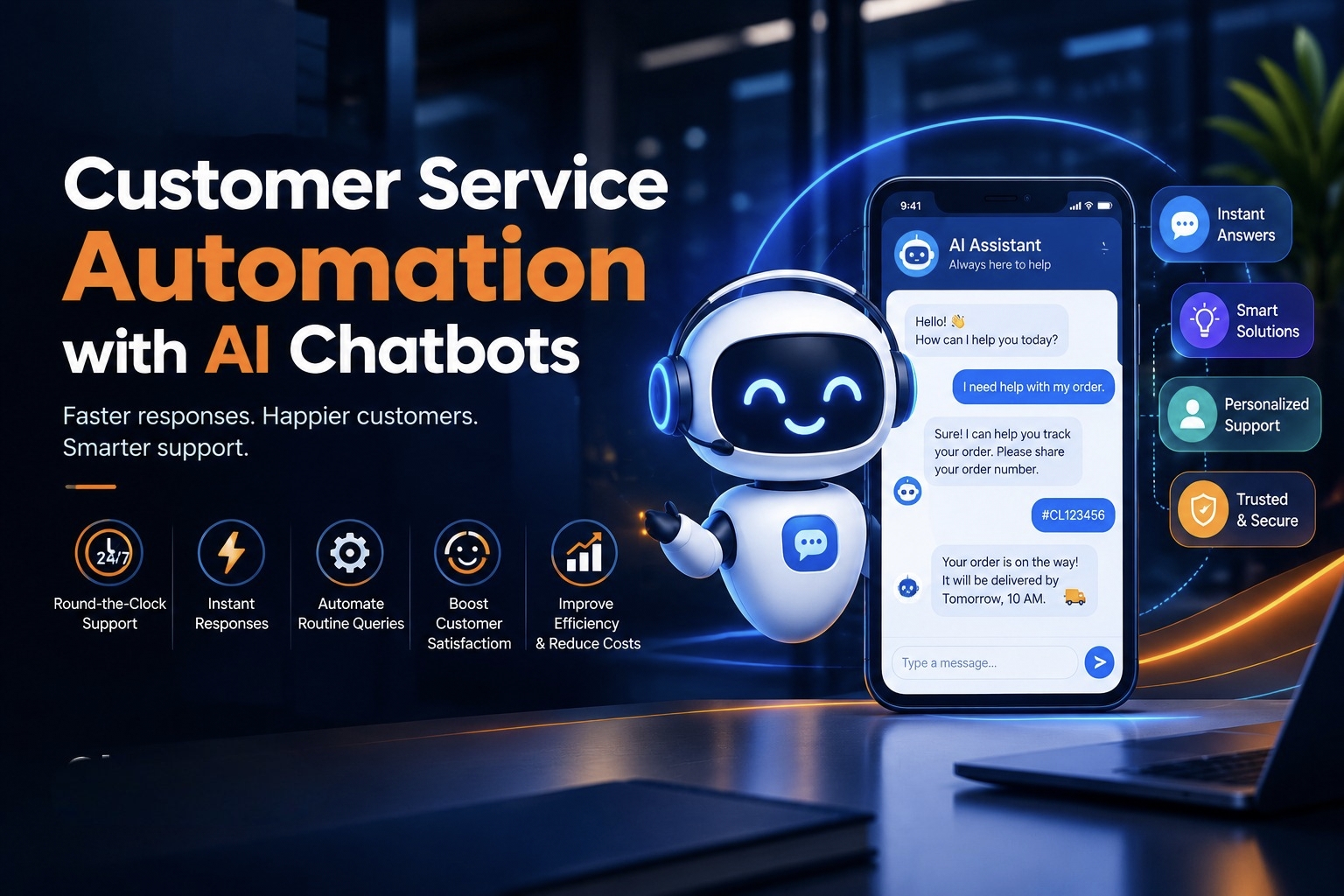
Customers increasingly expect quick responses when they have questions about products, services, orders, appointments, or technical issues. When support teams handle every query manually, response times can increase, especially during busy periods.
AI chatbots can help businesses handle routine customer interactions automatically while allowing support teams to focus on more complex issues. By providing instant responses, collecting information, and directing customers to the right resources, chatbots can make customer support more accessible and efficient.
Businesses exploring AI-powered systems and automation can also consider solutions such as those provided by https://www.clopid.com/, where AI chatbots, automation, virtual assistants, and intelligent workflows are part of the technology solutions offered.
What Are AI Chatbots?
AI chatbots are software applications that interact with users through text or conversational interfaces. Depending on their design, they can answer frequently asked questions, provide information, collect customer details, assist with basic troubleshooting, and route conversations to human support agents.
Modern AI-powered chatbots can use natural language processing and other AI technologies to understand user questions and provide contextually relevant responses.
Why Faster Customer Support Matters
Long response times can create frustration and may cause customers to abandon an enquiry before receiving assistance. Faster responses can make it easier for customers to find information when they need it.
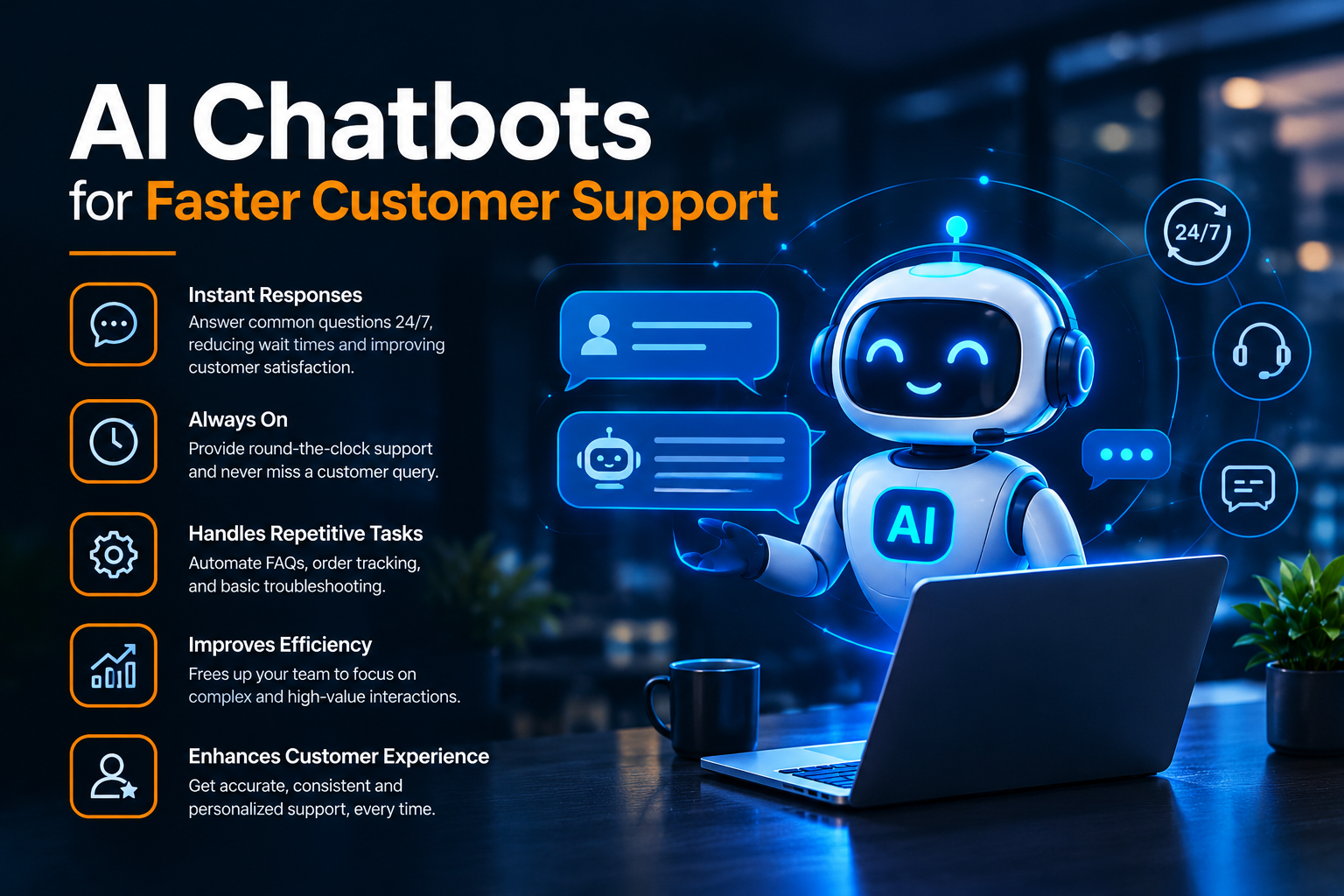
AI chatbots can help businesses provide immediate assistance for common questions without requiring a support representative to respond manually to every interaction.
Some common chatbot applications include:
- Answering frequently asked questions
- Providing business information
- Collecting customer enquiries
- Assisting with appointment requests
- Sharing product or service information
- Guiding users through basic troubleshooting
- Routing complex requests to support teams
1. Provide 24/7 Initial Assistance
One of the main advantages of AI chatbots is their ability to provide automated assistance outside normal business hours.
Customers may visit a website at any time. A chatbot can respond to common questions and collect enquiry details even when human support representatives are unavailable.
This does not necessarily replace human support. Instead, it can provide an initial response and ensure that customer requests are captured for follow-up.
Clopid currently lists AI chatbots and automation, AI system design, virtual assistants, and intelligent workflows among its AI solutions.
2. Handle Repetitive Questions
Support teams often receive similar questions repeatedly. Chatbots can automate responses to common enquiries, reducing the amount of repetitive work handled manually.
For example, a chatbot may provide information about:
- Business hours
- Services
- Pricing information
- Basic product details
- Appointment procedures
- Contact information
- Frequently requested documents
This allows support representatives to spend more time on enquiries that require human judgment.
3. Improve Response Times
A human support agent may need time to read an enquiry, research the answer, and respond. A chatbot can provide an automated response almost immediately when the required information is available within its configured knowledge base.
Faster first responses can make the customer journey smoother, particularly for straightforward questions.
4. Collect Customer Information
AI chatbots can also be used to collect information before a customer reaches a human support representative.
A chatbot can ask for details such as:
- Customer name
- Contact information
- Service required
- Order or enquiry details
- Problem description
- Preferred contact method
The collected information can then help the support team understand the request before starting the conversation.
5. Route Complex Queries to Human Agents
Not every customer issue should be handled entirely by automation. Complex technical problems, complaints, sensitive requests, and situations requiring human judgment may need to be transferred to a support representative.
An effective chatbot should therefore provide a clear escalation path.
The chatbot can gather initial information and then direct the conversation to the appropriate team, reducing the need for customers to repeat basic details.
6. Support Multiple Customer Interactions
Businesses may receive customer enquiries through websites, applications, messaging platforms, and other digital channels.
A well-designed chatbot strategy can help businesses provide consistent automated assistance across supported channels.
Integration with CRM systems can also help connect chatbot interactions with broader customer management processes.
For businesses looking to combine AI automation with CRM and enterprise technology solutions, https://www.clopid.com/ offers CRM support, AI solutions, automation, and related technology services.
Common AI Chatbot Mistakes
Providing Unclear Answers
Chatbot responses should be concise, relevant, and easy to understand. Poorly structured responses can make customer interactions more frustrating.
No Human Escalation
A chatbot should have a clear escalation option for complex or unresolved enquiries.
Outdated Information
If the chatbot's knowledge base is not maintained, it may provide inaccurate business or service information.
Too Many Automated Steps
Customers should not be forced through unnecessary chatbot interactions when they need human assistance.
Ignoring Customer Context
A chatbot should collect relevant information without asking customers to repeatedly provide details that are already available through an integrated system.
How to Implement an Effective AI Chatbot
Businesses can follow a structured approach when introducing chatbot automation:
Identify common queries → Define chatbot responsibilities → Prepare accurate information → Integrate relevant systems → Create escalation rules → Test responses → Monitor performance → Improve continuously
The chatbot should be designed around actual customer support requirements rather than simply adding AI technology without a defined purpose.
Measuring AI Chatbot Performance
Businesses can monitor several metrics to understand whether their chatbot is supporting customer service effectively.
Useful metrics may include:
- First response time
- Number of conversations handled
- Automated resolution rate
- Human escalation rate
- Customer satisfaction
- Frequently asked questions
- Failed or unresolved conversations
- Average conversation duration
These measurements can help teams identify areas where the chatbot needs better information, improved workflows, or additional human support.
Frequently Asked Questions
Can AI chatbots replace customer support agents?
AI chatbots can automate many routine interactions, but complex issues may still require human support. A combination of automation and human assistance can provide broader support coverage.
Can chatbots provide support 24/7?
Yes. Automated chatbots can respond to supported customer queries outside normal business hours, although the availability of human escalation depends on the organization's support model.
Can an AI chatbot connect with a CRM?
Yes, chatbots can be integrated with CRM systems where the required technical integration is available. This can help connect customer conversations with customer records and workflows.
What types of questions can chatbots handle?
Chatbots can handle frequently asked questions, basic service information, initial troubleshooting, enquiry collection, appointment-related questions, and other predefined support tasks.
Conclusion
AI chatbots can help businesses improve customer support by providing faster responses, handling repetitive enquiries, collecting customer information, and directing complex issues to the appropriate support teams.
The most effective chatbot strategy is not simply about automating as many conversations as possible. It should focus on providing useful information, maintaining accurate responses, creating clear human escalation paths, and integrating automation with existing business processes.
Visit Website
For more information about AI chatbots, automation, virtual assistants, and intelligent business solutions, visit https://www.clopid.com/.
Explore Clopid's technology solutions to learn how AI-powered automation can support faster customer service and more efficient business workflows.